
This is Post 7 of 16 in the Taiwan Risk Series. Full series at polarismng.com
KPI #7 — China’s Achilles Heel
Energy & Food Import Vulnerability
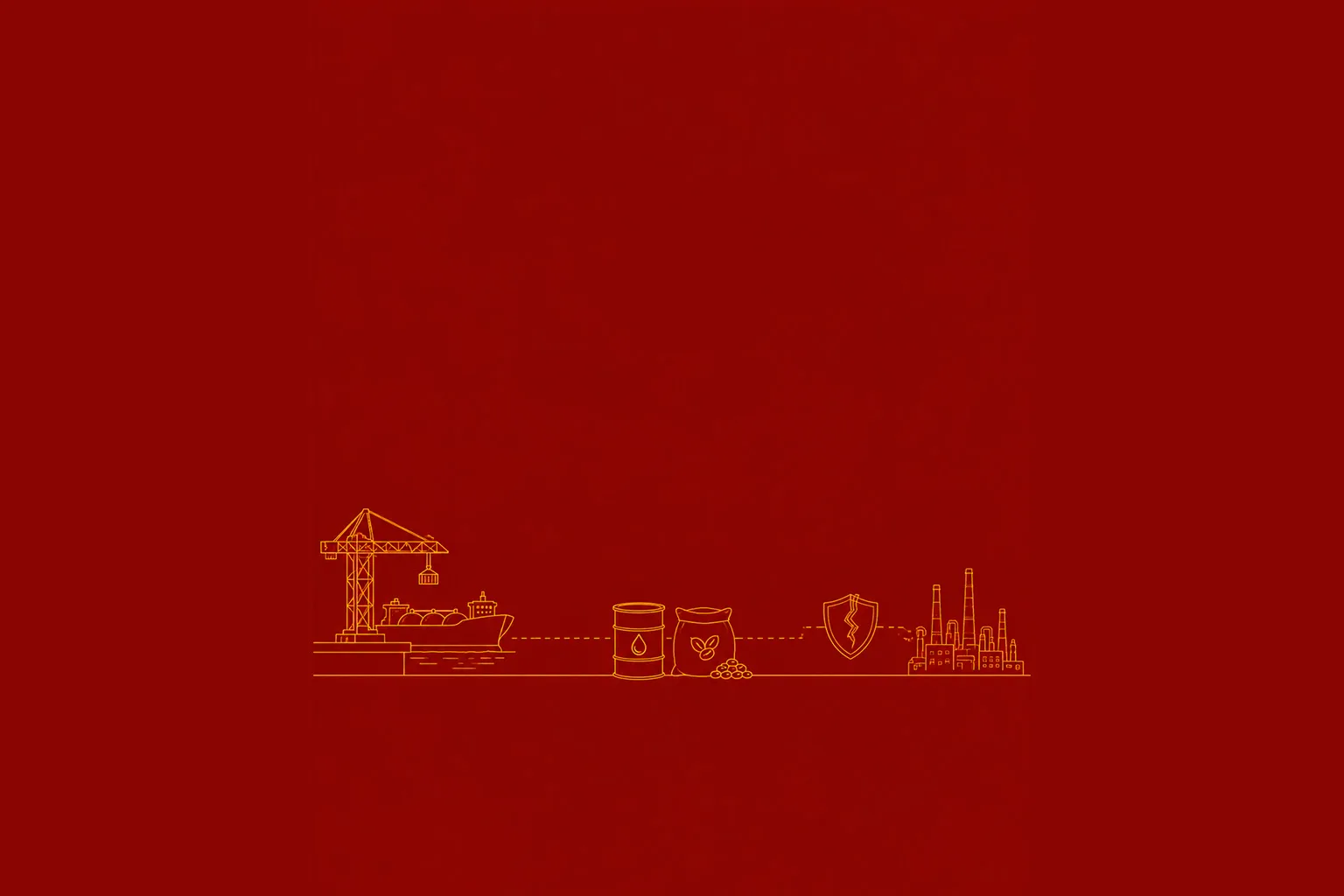
What it measures: China’s exposure to naval interdiction of its energy and food supply routes — specifically, what proportion of critical imports can be blocked by US and allied naval forces without requiring a single shot on Chinese territory.
One of the most powerful structural deterrents against a Chinese invasion of Taiwan is not military. It is logistical. China imports the majority of its crude oil through the Strait of Malacca — a chokepoint controllable by US naval assets. It imports the majority of its soya — a staple input for animal feed and food security — from Brazil, via sea routes transiting the same vulnerable corridors.
In a conflict scenario, US and allied naval forces would not need to attack China directly to impose catastrophic economic pain. They would only need to interdict the ships. China’s own economists understand this, which is why overland energy alternatives via Russia and Central Asia have been a strategic priority. But those alternatives are not yet sufficient to replace maritime dependency.
Until the overland pipeline and rail infrastructure reaches a threshold of coverage — estimated by analysts at above 70% of critical supply — maritime vulnerability remains China’s most powerful self-deterrent.
Current status: 🟢 Green. China remains highly vulnerable to maritime sanctions. This is one of the strongest structural deterrents in the dashboard — and one of the reasons the overall reading stays amber rather than red.
📍 Next in the series
KPI #8 — When Washington Goes Quiet, Beijing Listens. The most politically sensitive KPI in the dashboard: what the current US administration’s posture on Taiwan actually signals to the people who matter most.
⚡ The consequence to watch
If this KPI moves to amber, the economic deterrence calculus shifts significantly. A China that has secured 50%+ of its critical supply via non-maritime routes is a China that can absorb a prolonged naval blockade — changing the entire cost-benefit of military action.
🔧 The drill
Track China’s pipeline infrastructure agreements with Russia and Central Asian states. The Power of Siberia 2 pipeline negotiations are the single most important project to monitor in this KPI. Its completion or failure will move this indicator more than any military development.
Sources: Stimson Center (2025); Responsible Statecraft (2025); OEC World trade data. Full series: polarismng.com